What impact does the personal account reform of multi-local medical insurance bring to the insured? Let’s watch together!
CCTV News:Recently, many places have adjusted the calculation method and scope of use of funds in employee medical insurance personal accounts, which has aroused public discussion. Today (August 26th), "A little attention", let’s take a look at what a personal account is. What should I do with the money in this account? What impact will this adjustment bring to the insured?
The basic medical insurance for urban workers in China adopts the mode of combining social pooling account with individual account. Personal account funds are earmarked for special purposes, and can be used to pay for the medical expenses incurred by the insured person for medical treatment, medical institutions for medical treatment, and retail pharmacies to buy drugs. Because it is earmarked, the funds in the personal accounts of employees’ medical insurance in most areas of China cannot be withdrawn, and there are clear regulations on the areas of use.
Recently, the Beijing Municipal Health Insurance Bureau issued the Notice on Adjusting the Relevant Policies of the Basic Medical Insurance for Urban Employees in this Municipality, which made it clear that from September 1 this year, personal account funds will be subject to bookkeeping management, and insured persons will not be able to withdraw freely, thus realizing directional use, which has changed the situation that personal accounts for medical insurance in Beijing can be withdrawn freely for more than 20 years.
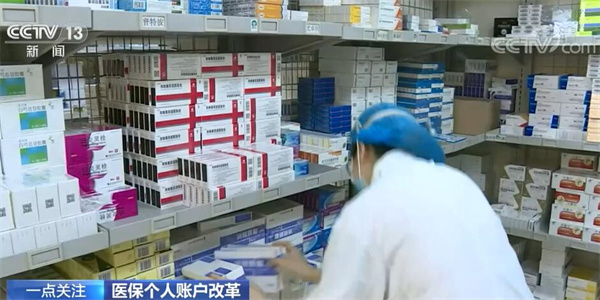
Wang Zongfan, Director and Researcher of Medical Security Research Office of China Academy of Labor and Social Security:We used to, for example, be able to withdraw money freely and do whatever you want. When you need it, the money will be gone. We don’t take medical insurance from the left pocket to the right pocket, otherwise we don’t need to establish medical insurance. I put the money in my own (personal) account, and my special deposit will be used up in the future, but it has no insurance function.
Regarding whether the personal account funds previously included in the special passbook for medical insurance can still be freely withdrawn, the Beijing Municipal Medical Insurance Bureau said that the personal account funds that have been included in the special passbook for medical insurance before September 1 can still be withdrawn at any time in the future.
There is also a concern about the policy adjustment of the medical insurance personal account, that is, all the contributions paid by the unit are included in the overall fund. We know that the money paid by the original unit will be divided into a certain proportion to the personal account, and now this part is also included in the overall fund. The proportion of individual accounts and overall funds has been adjusted, so what impact does this have on the guarantee ability of medical insurance funds?
According to the National Medical Insurance Bureau, by the end of 2021, the accumulated balance of the national basic medical insurance fund was 3.6 trillion yuan, of which the accumulated balance of employee medical insurance personal accounts was 1.1 trillion yuan. With the development of social economy and the improvement of medical demand, the limitations of personal accounts, which account for nearly one third of the medical insurance fund, are gradually highlighted, mainly due to insufficient security function, insufficient mutual aid and ineffective burden reduction.
Wang Zongfan, Director and Researcher of Medical Security Research Office of China Academy of Labor and Social Security:Overall planning is to put money together and use it as a fund pool for expense reimbursement when necessary.
In April last year, the State Council issued "Guiding Opinions on Establishing and Perfecting the Security Mechanism of Employees’ Basic Medical Insurance Outpatient Mutual Aid", which requires improving the method of counting personal accounts, increasing the security function of medical insurance funds, and reducing the burden of outpatient medical expenses for the masses. Taking Beijing as an example, although the unit payment is no longer included in the personal account, at the same time, the outpatient service security has been increased, for example, the maximum payment limit of 20,000 yuan for employee medical insurance outpatient service has been cancelled, the reimbursement for outpatient service has not been capped, and the minimum payment standard for employee serious illness security has been lowered. Especially for the insured who spend more in outpatient service due to serious illness, the fund support ability is more prominent and the level of protection is significantly improved.
Wang Zongfan, Director and Researcher of Medical Security Research Office of China Academy of Labor and Social Security:This time, we may hope to enlarge the pool of an outpatient service (as a whole) by reducing personal accounts, so as to improve the level of outpatient service (security), which can provide better treatment. Including the cancellation of the outpatient co-ordination fee (upper limit) in Beijing this time, now 20,000 yuan can be reimbursed at 60% until there is no upper limit, which is a very good guarantee for some patients with serious illnesses in real outpatient clinics.
It is estimated that there is no capping line for outpatient treatment in Beijing, which is expected to benefit about 170,000 insured people every year and reduce the burden of medical expenses by about 1 billion yuan. After the deductible for serious illness of employees is lowered, it is estimated that it will benefit about 35,000 people every year and reduce the burden by about 120 million yuan.
In the past, the medical insurance personal account could only be used for my medical reimbursement. Since the beginning of this year, the medical insurance account family mutual aid system has been implemented in many places across the country, and the personal account can also be used to pay the personal burden of the spouse, parents and children of the insured for medical treatment-related expenses. The balance of personal account funds was activated, and a new guarantee mechanism of "I am for my family and my family is for me" was established. At present, Shanghai, Chongqing, Guangdong, Hunan and other places have successively issued policies and implemented them.
Recently, Ms. An took her son to the dermatology department of Shanghai Children’s Hospital. After face-to-face consultation, the doctor suggested allergen screening and prescribed some drugs for eczema. Ms. An found that part of the expenses for taking the children to see a doctor was reimbursed from the children’s medical insurance account, and the part that originally needed to be paid in cash was deducted from her freemasonry account.
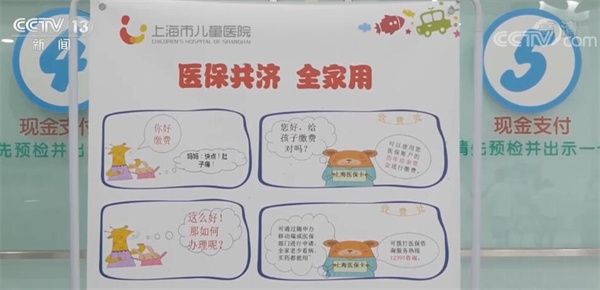
Personal medical insurance accounts in Shanghai can’t be withdrawn freely, so the balance of medical insurance accounts for young people with less medical needs will be accumulated but rarely used. Family mutual aid has been officially implemented in Shanghai since August. As of the 15th, about 1,800 families have used mutual aid accounts in Shanghai Children’s Hospital, with more than 400,000 yuan in funds.
Yu Guangjun, Dean of Shanghai Children’s Hospital:Often children’s parents are younger, and their account funds accumulate more, but children, especially when they are younger, have a higher probability of getting sick and using medical insurance fees. After using the mutual aid account, his benefits are also the most obvious.
Wang Zongfan, Director and Researcher of Medical Security Research Office of China Academy of Labor and Social Security:The personal accounts of young and healthy people are here, which has no effect. The elderly and children in family members need such medical expenses and help each other within the family. Originally, they may not be able to use personal accounts, but they have to pay in cash. Using personal accounts can still reduce the burden on the family.
The relevant policy adjustment of employee medical insurance personal account provides the fund’s ability to help each other, solves the limitations of employee medical insurance personal account, and further clarifies that employee medical insurance personal account shall not be used for expenses that are not covered by basic medical insurance, such as physical fitness or health care consumption.
Wang Zongfan, Director and Researcher of Medical Security Research Office of China Academy of Labor and Social Security:Because personal accounts are earmarked as medical insurance funds, in some places, personal accounts were really opened, for example, to buy fitness cards and health care products, and expand them to the scope explicitly prohibited by the current policy, then this reform may need to take it back.
According to the regulations, designated medical institutions shall not collude with the insured to use medical insurance vouchers to buy food and health care products. If the insured intentionally violates the use of personal accounts, he may be suspected of fraudulent insurance.
Wang Zongfan, Director and Researcher of Medical Security Research Office of China Academy of Labor and Social Security:Replacing medicines with health care products are all fraudulent insurance fraud, so this should be clear from the policy, but there may be such fraudulent insurance fraud in pharmacies and even hospitals, which is precisely a key area of regulatory crackdown now.