Xinhua News Agency, Beijing, January 19th-the State Council Press Office released a white paper entitled "Green Development of China in the New Era" on January 19th. The full text is as follows:
China’s Green Development in the New Era
(January 2023)
People’s Republic of China (PRC)
the State Council Information Office
catalogue
foreword
First, unswervingly follow the road of green development
(A) adhere to the people-centered development thinking
(2) Focus on the sustainable development of the Chinese nation
(C) adhere to the concept of systems to promote overall planning
(D) seek common global sustainable development
Second, the green space pattern has basically taken shape.
(1) Optimize the pattern of land space development and protection
(2) Strengthen the protection and restoration of ecosystems.
(3) Promote the green development of key areas.
(D) Building an ecologically livable beautiful homeland.
Third, the continuous adjustment and optimization of industrial structure
(1) Vigorously develop strategic emerging industries.
(B) to guide the orderly development of resource-based industries
(C) optimize the industrial regional layout
Fourth, green production methods are widely implemented.
(A) to promote the green transformation of traditional industries
(2) Promote green and low-carbon energy development.
(C) building a green transportation system
(D) Promote the conservation and intensive use of resources.
Five, the green lifestyle is becoming fashionable.
(A) ecological civilization education continued to advance.
(B) the creation of green life has been widely carried out.
(C) the growing consumption of green products
Six, the green development system and mechanism gradually improved.
(1) Strengthening the rule of law.
(2) Strengthen supervision and management.
(C) improve the market-oriented mechanism
Seven, work together to build a beautiful earth home.
(1) Actively participate in global climate governance.
(2) Promote the joint construction of the green "Belt and Road"
(C) extensive bilateral and multilateral international cooperation.
Concluding remarks
foreword
Green is the symbol of life and the background color of nature, and a good ecological environment is the foundation of a better life and the common expectation of the people. Green development is a development that conforms to nature and promotes the harmonious coexistence between man and nature. It is a development that achieves the maximum economic and social benefits with the least cost of resources and environment. It is a high-quality and sustainable development, which has become the consensus of all countries.
For thousands of years, the Chinese nation has respected and protected nature, and it is a distinctive feature of Chinese civilization to advocate "harmony between man and nature". Since the reform and opening up, China has established resource conservation and environmental protection as its basic national policy, sustainable development as its national strategy, and vigorously promoted the construction of socialist ecological civilization.
Since the 18th National Congress of the Communist Party of China, under the guidance of Socialism with Chinese characteristics Thought, the supreme leader in the new era, China has adhered to Lucid waters and lush mountains are invaluable assets’s idea, unswervingly followed the road of ecological priority and green development, promoted the overall green transformation of economic and social development, and built a harmonious and symbiotic modernization between man and nature, creating an ecological miracle and a green development miracle that attracted worldwide attention, and made great strides in the construction of beautiful China. Green has become the bright background of China in the new era, and green development has become a prominent feature of Chinese modernization. The vast land of China has bluer sky, greener mountains and clearer water, and people enjoy more, more inclusive and more sustainable green welfare. The green development of China has added more "China Green" to the earth and expanded the global green map, which has benefited both China and the world.
As the largest developing country in the world, China adheres to the concept of a community of human destiny, firmly practices multilateralism, puts forward global development initiatives and global security initiatives, deepens pragmatic cooperation, and actively participates in global environmental and climate governance, thus contributing to the implementation of the UN’s 2030 sustainable development agenda, promoting global sustainable development, building a community of human and natural life together, and building a prosperous, clean and beautiful world.
In order to comprehensively introduce the concept, practice and effect of green development in China in the new era and share the experience of green development in China, this white paper is issued.
First, unswervingly follow the road of green development
China conforms to the people’s new expectations for a better life, establishes and practices Lucid waters and lush mountains are invaluable assets’s ideas, plans development from the height of harmonious coexistence between man and nature, and promotes high-quality economic and social development and high-level protection of ecological environment in coordination, and has embarked on a civilized development path of production development, affluent life and good ecology.
(A) adhere to the people-centered development thinking
People-centered is the Communist Party of China (CPC)’s ruling philosophy, and a good ecological environment is the fairest public product and the most inclusive people’s livelihood. With the continuous advancement of China’s modernization and the continuous improvement of people’s living standards, people’s need for a beautiful ecological environment is more urgent, and the ecological environment plays an increasingly prominent role in people’s life happiness index. China complies with the people’s growing needs for a beautiful ecological environment, adheres to the principle of benefiting the people, benefiting the people and serving the people, vigorously promotes a green production lifestyle, focuses on solving outstanding environmental problems that harm people’s health, continuously improves the quality of the ecological environment, and provides more high-quality ecological products, so that people can have more sense of acquisition, happiness and security in a beautiful ecological environment.
(2) Focus on the sustainable development of the Chinese nation
Ecological prosperity leads to civilized prosperity, while ecological decline leads to civilized decline. Nature is the basic condition for human survival and development. Only by respecting, conforming to and protecting nature can we achieve sustainable development. Based on the realistic national conditions of limited environmental capacity and fragile ecosystem, China regards the construction of ecological civilization as a fundamental plan for the sustainable development of the Chinese nation, which requires both Jinshan Yinshan and green hills, and promotes the transformation of green hills into Jinshan Yinshan, so that natural wealth and ecological wealth can continuously bring economic wealth and social wealth, realize the simultaneous improvement of economic benefits, ecological benefits and social benefits, and build the modernization of harmonious coexistence between man and nature.
(C) adhere to the concept of systems to promote overall planning
Green development is an all-round and revolutionary change in production mode, lifestyle, way of thinking and values. China has put the concept of system into the whole process of economic and social development and ecological environmental protection, correctly handled a series of relations such as development and protection, overall and local, current and long-term, and built a scientific and moderately orderly land spatial layout system, an economic system of green and low-carbon circular development, and an institutional system with both constraints and incentives, making overall plans for industrial restructuring, pollution control, ecological protection, coping with climate change, and promoting carbon reduction, pollution reduction, greening and growth in coordination. Promote ecological priority, conservation and intensive, green and low-carbon development, form a spatial pattern, industrial structure, production mode and lifestyle that saves resources and protects the environment, and promote a comprehensive green transformation of economic and social development.
(D) seek common global sustainable development
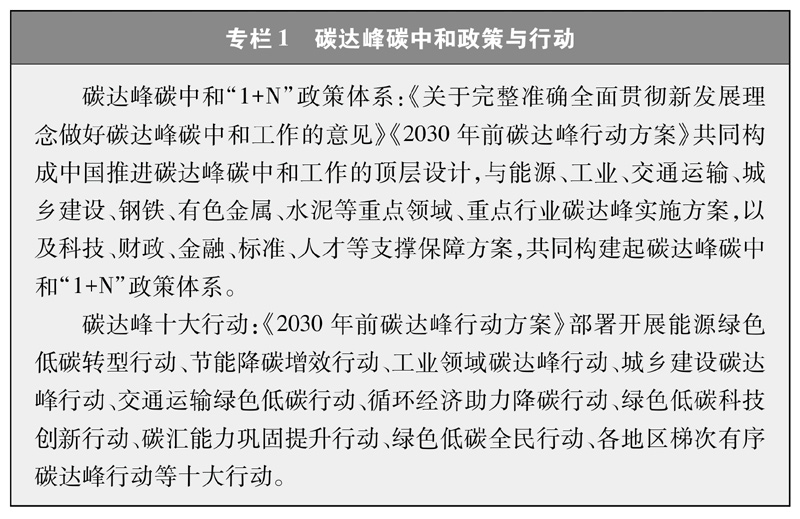
Protecting the ecological environment and coping with climate change is the common responsibility of all mankind. Only when all countries in the world unite and work together to promote green and sustainable development can we maintain the overall balance of the earth’s ecology and protect the only home on which all mankind depends. Standing on the height of being responsible for human civilization, China actively participates in global environmental governance, promises the world to strive to achieve peak carbon dioxide emissions by 2030 and carbon neutrality by 2060, promotes green transformation with the goal of "carbon neutrality in peak carbon dioxide emissions", carries out bilateral and multilateral international cooperation on green development with a more positive attitude, promotes the construction of a fair, reasonable and win-win global environmental governance system, and contributes wisdom and strength to global sustainable development.
Second, the green space pattern has basically taken shape.
China actively improves the national land space system, strengthens the overall planning and coordinated control of the use of production, living and ecological space, strengthens the protection and restoration of ecological system, effectively expands the ecological environment capacity, promotes the rapid accumulation of natural wealth and ecological wealth, and the ecological environment protection has undergone historic, turning and overall changes, providing strong support for sustained and healthy economic and social development.
(1) Optimize the pattern of land space development and protection
Land is the space carrier of green development. China has implemented the strategy of main functional areas, established a national unified, clear responsibilities and rights, scientific and efficient land space planning system, and made overall plans for land space development and protection by coordinating population distribution, economic layout, land use, ecological environment protection and other factors, so as to achieve higher quality and more sustainable land space development and protection.
Realize the "multi-regulation integration" of land and space planning. Integrate the main functional area planning, land use planning, urban and rural planning and other spatial planning into a unified national spatial planning, gradually establish a "multi-regulation-integrated" planning approval system, implementation supervision system, regulatory policy system and technical standard system, strengthen the guiding and binding role of national spatial planning on various special plans, speed up the compilation of various types of national spatial planning, and gradually form a "one map" for the development and protection of national land space.
Coordinate and optimize the spatial layout of the country. Based on the results of the national land survey, we will evaluate the carrying capacity of resources and environment and the suitability of land space development, scientifically arrange functional spaces such as agriculture, ecology and towns, and optimize the three spatial patterns of major agricultural products producing areas, key ecological functional areas and urbanized areas. Coordinate the delineation of space control boundaries such as cultivated land and permanent basic farmland, ecological protection red line, urban development boundary and various sea protection lines, strengthen the bottom line constraint, unify the control of land space use, and build a solid spatial foundation for national security development.
Strengthen the management of key ecological functional areas. Efforts will be made to prevent and control ecological risks, and county-level administrative regions that undertake important ecological functions such as water conservation, soil and water conservation, windbreak and sand fixation, and biodiversity protection will be identified as key ecological function areas. Focusing on protecting the ecological environment and providing ecological products, large-scale and high-intensity industrialized urbanization development will be restricted, the overall stability of natural ecosystems will be promoted, the ecological service function will be gradually enhanced, and the supply level of ecological products will be continuously improved.
(2) Strengthen the protection and restoration of ecosystems.
Mountains and rivers, forests, fields, lakes, grass and sand are a community of life. China strengthens systematic governance, comprehensive governance, source governance and legal governance, insists on giving priority to protection and natural restoration, vigorously promotes the protection and restoration of ecosystems, builds a national ecological security barrier, and lays a solid foundation for the sustainable development of the Chinese nation.
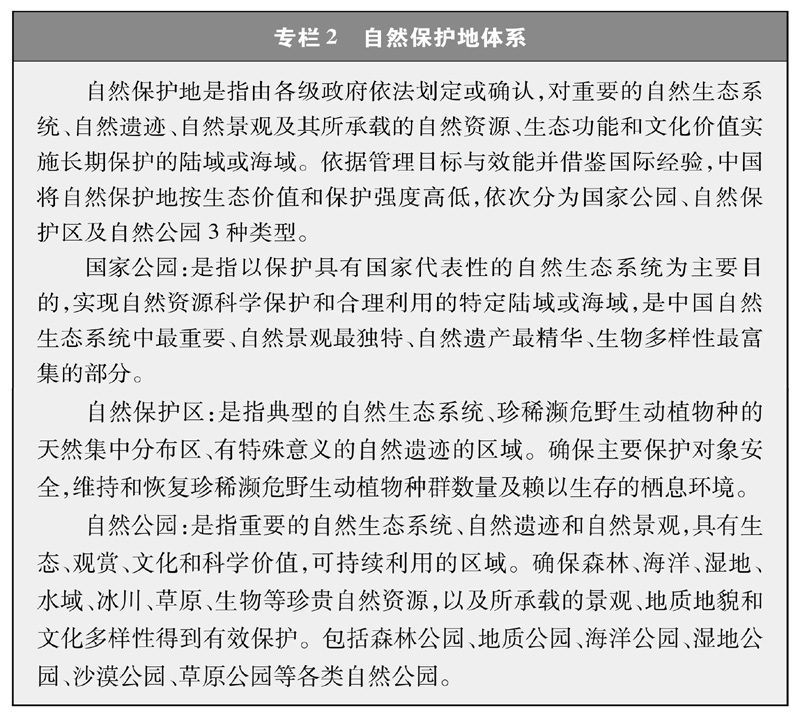
Initially establish a new nature reserve system. Nature reserve is the core carrier of ecological construction. China strives to build a nature reserve system with national parks as the main body, nature reserves as the foundation and various natural parks as supplements, and formally establishes the first batch of five national parks, namely, Sanjiangyuan, Giant Panda, Northeast Tiger Leopard, Hainan Tropical Rainforest and Wuyishan, and actively, steadily and orderly promotes the establishment of national parks in ecologically important areas. By the end of 2021, nearly 10,000 nature reserves have been established, accounting for more than 17% of the land area, and 90% of terrestrial natural ecosystem types and 74% of national key protected wild animal and plant species have been effectively protected.
Scientifically delimit the red line of ecological protection. The red line of ecological protection is the bottom line and lifeline of national ecological security. China has classified the areas with extremely important ecological functions, extremely fragile ecology and potentially important ecological values into the red line of ecological protection, including the integrated and optimized nature reserves, so as to realize a red line to control important ecological spaces. Up to now, the red line area of China’s land ecological protection accounts for more than 30% of the land area. By delineating the red line of ecological protection and compiling the ecological protection and restoration plan, the ecological security pattern of "three zones and four zones" based on the ecological barrier zone of Qinghai-Tibet Plateau, the key ecological zone of the Yellow River (including the ecological barrier of the Loess Plateau), the key ecological zone of the Yangtze River (including the ecological barrier of Sichuan and Yunnan), the northeast forest zone, the northern sand control zone, the southern hilly region and the coastal zone has been consolidated.
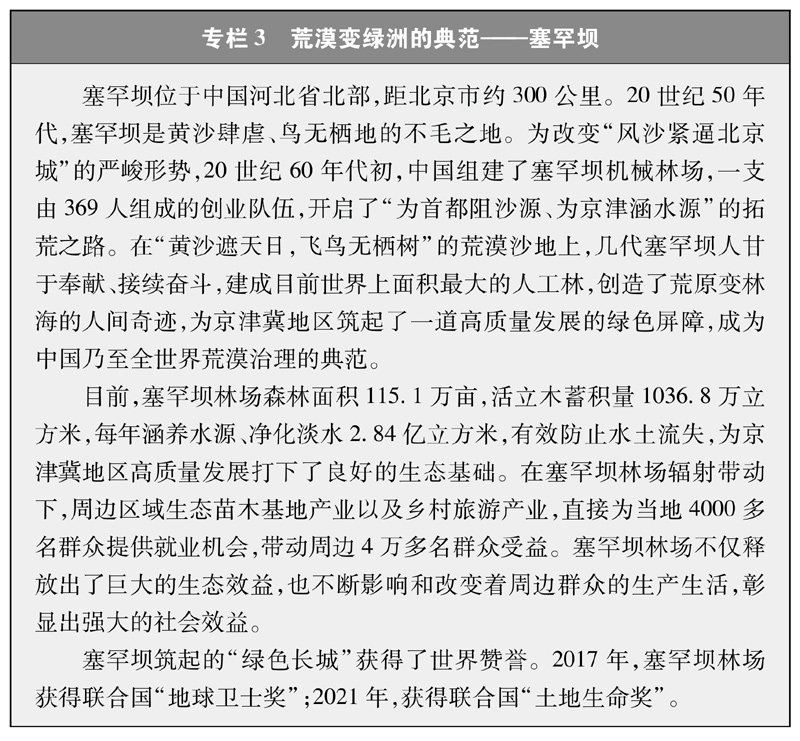
Implement major projects for the protection and restoration of important ecosystems. Focusing on national key ecological function area, ecological protection red line and nature reserve, we will start the integrated protection and restoration project of mountains, rivers, fields, lakes, grass and sand, and make overall plans to promote systematic management, comprehensive management and source management. We have successively implemented a number of eco-environmental restoration projects with important ecological impact, such as the protection and restoration of shelterbelts and natural forests in the Three North and the Yangtze River, the restoration of farmland to forests and grasslands, the ecological restoration of mines, the renovation of the "Blue Bay", the protection and restoration of coastal zones, the tough battle for comprehensive management of the Bohai Sea, and the protection and restoration of mangroves. We have scientifically carried out large-scale land greening actions, promoted the continuous increase of forests, grasslands, wetlands, rivers and lakes, and effectively reversed the trend of land desertification. In 2012-2021, China has completed 960 million mu of afforestation, 278 million mu of sand prevention and control, 600 million mu of grass improvement, and more than 12 million mu of new and restored wetlands. In 2021, the forest coverage rate in China reached 24.02%, and the forest stock reached 19.493 billion cubic meters. The forest coverage rate and forest stock kept "double growth" for more than 30 years, making it the country with the largest growth of forest resources and the largest area of artificial afforestation in the world. China took the lead in achieving "zero growth" of land degradation in the world, and "double reduction" of desertified land and desertified land area, which played a positive role in achieving the goal of zero growth of land degradation in 2030. Since 2000, China has always been the main force of "greening" in the world, and about 1/4 of the new green area in the world comes from China.
(3) Promote the green development of key areas.
China gives full play to the leading role in upgrading major regional strategies, adheres to the concept of ecological priority and green development, promotes the implementation of major regional strategies, strives to build the first echelon of green development, and promotes the overall improvement of the green level of national economic and social development.
Promote the coordinated development of Beijing-Tianjin-Hebei, and take the lead in ecological and environmental protection. We will implement the coordinated development strategy of Beijing-Tianjin-Hebei, promote it in the fields of transportation, environment, industry and public services, and strengthen the joint construction, joint prevention and control of ecological environment. Focusing on the Beijing-Tianjin-Hebei region, the comprehensive management of groundwater overexploitation in North China was carried out, which reversed the downward trend of groundwater level in North China since the 1980s. Plan from a high starting point and build xiong’an new area with high standards. Around building Beijing into a non-capital functional centralized bearing place, we will build an eco-city with reasonable layout, blue and green interweaving, fresh and bright, and a harmonious water city, and build a "model city" with green and high-quality development. In 2021, the proportion of days with good air quality in 13 cities in Beijing, Tianjin and Hebei reached 74.1%, up 32.2 percentage points from 2013, and Beijing’s atmospheric environmental governance became a China sample of global environmental governance.
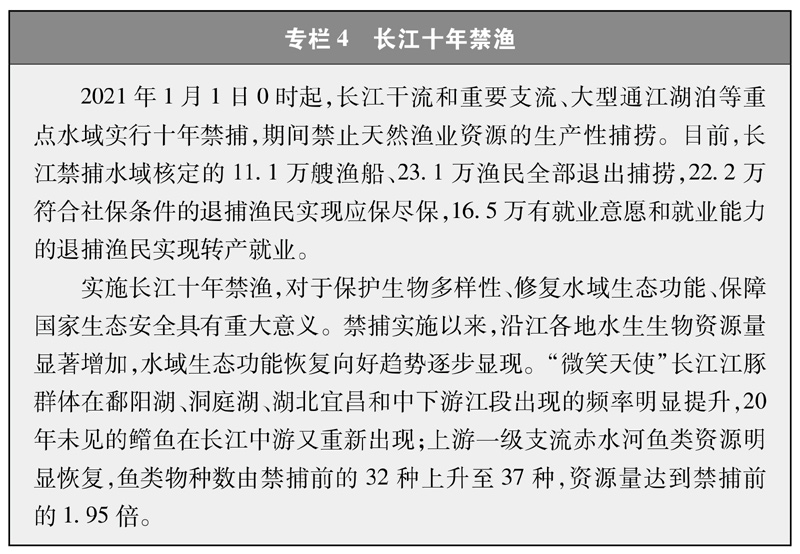
Promoting the construction of the Yangtze River Economic Belt with the guidance of joint protection and no development. The Yangtze River is the mother river of the Chinese nation and an important support for its development. China insists on restoring the ecological environment of the Yangtze River in an overwhelming position, coordinates and promotes economic development and ecological environment protection, and strives to build a green development demonstration zone where man and nature coexist harmoniously, making the Yangtze River Economic Belt the main battlefield for ecological priority and green development. Give full play to the overall advantages of industrial synergy, build a green industrial system, and accelerate the pace of green transformation of regional economy. Vigorously promote the protection and restoration of the Yangtze River, carry out the "4+1" project of urban sewage and garbage treatment, chemical pollution control, agricultural non-point source pollution control, ship pollution control and tailings pond pollution control, fully implement the ten-year ban on fishing in the Yangtze River, and carry out the utilization project of the Yangtze River coastline and clean up and rectify the illegal short enclosure. Since 2018, the coastline of the Yangtze River has retreated by 162 kilometers, the beach has been greened by 12.13 million square meters, and the water area has been restored by 68,000 mu. The water quality of the national control section of the main stream of the Yangtze River has reached Grade II for two consecutive years.
Give play to the exemplary role of green development in the Yangtze River Delta region. Accelerate the construction of the Yangtze River Delta ecological green integration development demonstration zone, take the lead in exploring the transformation of ecological advantages into economic and social development advantages, from project coordination to regional integration system innovation, rely on beautiful scenery, cultural heritage and characteristic industries, gather innovative factor resources, consolidate the ecological background of green development, and create a highland for green innovation and development.
Promote ecological protection and high-quality development in the Yellow River Basin. Take the protection of the Yellow River as a long-term plan for the development of the Chinese nation, and persist in making overall plans for the ecological protection and management of the upper and lower reaches, main tributaries and left and right banks of the Yellow River. We will protect and control the ecological environment of the whole basin, promote the prevention and control of soil erosion and desertification in the upper and middle reaches, and comprehensively control the downstream rivers and beaches, so that the sediment load of the Yellow River will decrease steadily and ensure the An Lan of the Yellow River. Adhere to the road of intensive, economical development with water as the basis for determining cities, land, people and production, ensuring water safety and effective utilization, and obviously improving water ecology. The area along the Yellow River actively explores the protection, inheritance and promotion of the Yellow River culture and the development of characteristic industries, cultivates and expands new industries and new formats, promotes the simultaneous improvement of ecological and economic values, and makes the Yellow River an ecological river and a happy river that benefits the people and the people.
Building a beautiful Guangdong-Hong Kong-Macao Greater Bay Area. Guided by the construction of Meiliwan District, we will strive to improve the quality of ecological environment, explore a green and low-carbon urban construction and operation mode, promote the sustainable development of Greater Bay Area, make Greater Bay Area’s sky bluer, mountains greener and water cleaner, and build Guangdong-Hong Kong-Macao Greater Bay Area with ecological security, beautiful environment, social stability and cultural prosperity.
(D) Building an ecologically livable beautiful homeland.
Urban and rural areas are the main space for people to live together. China has integrated the concept of green development into urban and rural construction activities, vigorously promoted the construction of this beautiful city and beautiful countryside, highlighted environmental pollution control, and made great efforts to improve the quality of human settlements, so as to build beautiful homeland, where mountains and forests are fully dyed, plains are blue and green, and urban and rural areas are full of birds and flowers.
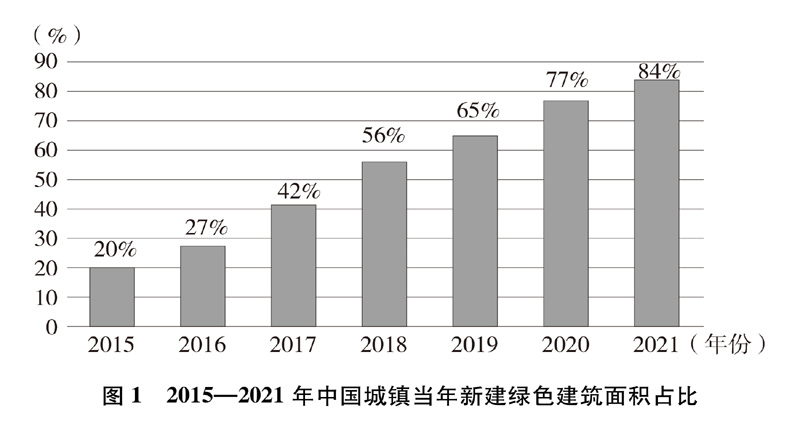
Building a harmonious coexistence of man and nature in this beautiful city. China puts the protection of urban ecological environment in a prominent position, promotes urbanization with people as the core, scientifically plans and arranges the city’s production space, living space and ecological space, builds a livable city, a resilient city and a smart city, and builds the city into a beautiful homeland where man and nature coexist harmoniously. Adhere to respect for nature, conform to nature, rely on the unique scenery such as existing landscapes to promote urban construction, integrate the city into nature, and let residents see mountains, water and remember homesickness. Continue to expand the urban ecological space, build a national garden city and a national forest city, promote the construction of urban park system and greenway network, vigorously promote urban greening, and let the city reproduce green mountains and green rivers. From 2012 to 2021, the green coverage rate of urban built-up areas increased from 39.22% to 42.06%, and the per capita park green area increased from 11.8 square meters to 14.78 square meters. Vigorously develop green and low-carbon buildings, promote the transformation of existing buildings, and continuously improve the level of building energy conservation.
Create a green, ecologically livable and beautiful country. China regards green development as a new engine to promote rural revitalization and explores a new path of rural green development. Actively develop new industries and formats such as eco-agriculture, rural e-commerce, leisure agriculture, rural tourism and healthy old-age care, strengthen ecological protection and restoration, and promote the continuous realization of the goal of strong agriculture, beautiful countryside and rich farmers. Continue to improve the rural living environment, improve rural roads, water supply, gas supply and other infrastructure, promote the rural toilet revolution, strengthen the treatment of domestic garbage and sewage, carry out village cleaning actions, comprehensively promote rural greening, and continue to carry out the construction of modern livable rural houses. More and more villages have achieved water purification, road hardening, lighting at night and clean energy. Strengthen the protection and utilization of traditional villages, inherit excellent traditional culture and enhance rural features. The vast rural areas are beautiful in ecology and environment, surrounded by jungles, full of fruits and vegetables, and full of beautiful eyes, presenting a beautiful picture of beautiful scenery, sky blue and green land, and village beauty.
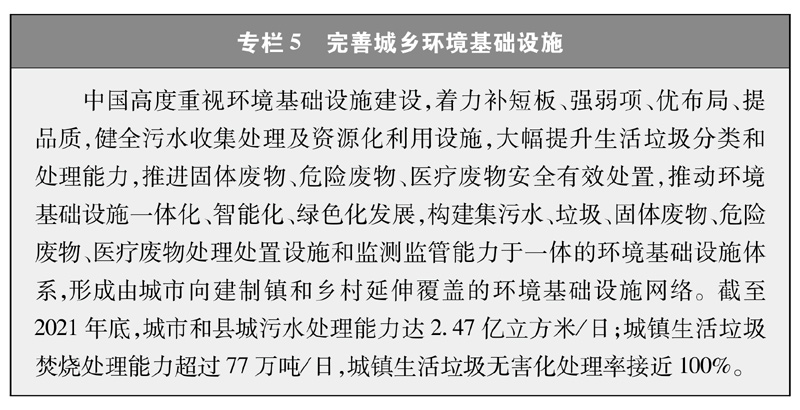
Continue to fight the battle against pollution. Environment is people’s livelihood, green hills are beautiful, and blue sky is also happiness. China insists on precise pollution control, scientific pollution control and pollution control according to law, focusing on solving outstanding problems such as air, water and soil pollution which are strongly reflected by the people, and continuously fighting for the blue sky, clear water and pure land. Regional joint prevention and control and heavy pollution weather response have achieved remarkable results, and fine particulate matter (PM) in cities at prefecture level and above in China2.5The average annual concentration dropped from 46 μ g/m3 in 2015 to 30 μ g/m3 in 2021, and the proportion of days with excellent air quality reached 87.5%, making it the fastest country in the world to improve air quality. The improvement of industrial, agricultural and domestic pollution sources and water ecosystem has been accelerated, the safety of drinking water has been effectively guaranteed, and the heavily polluted water bodies and substandard water bodies have been significantly reduced. In 2021, the proportion of excellent sections of surface water quality in China reached 84.9%. Foreign garbage is completely banned from entering the country, achieving the goal of "zero import" of solid waste, and soil environmental risks are basically controlled. Blue sky and white clouds, twinkling stars, clear water and green shore, shallow fish, people breathe fresher air, drink cleaner water, eat more assured food and live in a more beautiful environment, and truly feel the happiness and beauty brought by changes in the ecological environment.
Third, the continuous adjustment and optimization of industrial structure
China adheres to the new development concept of innovation, coordination, green, openness and sharing, shapes new kinetic energy and advantages of economic development with innovation as the guide, promotes deep adjustment of industrial structure with rigid constraints of resources and environment, and continuously optimizes industrial spatial layout by strengthening regional cooperation. Economic development has not only maintained a reasonable growth in quantity, but also achieved a steady improvement in quality, creating a new situation of high-quality development.
(1) Vigorously develop strategic emerging industries.
Implementing the innovation-driven development strategy, taking scientific and technological innovation as the driving force and guarantee to adjust the industrial structure and promote the green and low-carbon transformation of the economy and society, strategic emerging industries have become an important engine of economic development, and the gold content and green content of economic development have been significantly improved.
Investment in scientific and technological innovation has gradually increased. The R&D investment of the whole society has increased from 1.03 trillion yuan in 2012 to 2.80 trillion yuan in 2021, and the intensity of R&D investment has increased from 1.91% to 2.44%, which is close to the average level of OECD countries. The R&D investment of enterprises has been increasing, accounting for more than 76% of the total R&D investment. By the end of 2021, there were 49,000 effective invention patents in energy conservation and environmental protection industry and 60,000 effective invention patents in new energy industry in China, 1.6 times and 1.7 times of the end of 2017 respectively. From 2011 to 2020, the total number of environmental technology invention patent applications in China is close to 60% in the world, making it the most active country in the global layout of environmental technology innovation.
Emerging technologies have become an important support for economic development. The application of emerging technologies such as artificial intelligence, big data, blockchain and quantum communication has been accelerated, and new products and formats such as intelligent terminals, telemedicine and online education have been cultivated, and their driving role in economic development has been continuously enhanced. The scale of digital economy ranks second in the world. During the Thirteenth Five-Year Plan period (2016-2020), the added value of information transmission, software and information technology services grew at an average annual rate of 21%. Emerging technologies such as Internet, big data, artificial intelligence and 5G are deeply integrated with traditional industries, and the pace of integration of advanced manufacturing and modern service industry is accelerated. In 2021, the added value of high-tech manufacturing and equipment manufacturing accounted for 15.1% and 32.4% of the added value of industrial enterprises above designated size, respectively, up by 5.7 and 4.2 percentage points compared with 2012, and "Made in China" gradually transformed and upgraded to "Made in China".
The scale of green industry continues to grow. The renewable energy industry is developing rapidly. The production scale of clean energy equipment such as wind power and photovoltaic power generation ranks first in the world, and polysilicon, silicon wafers, batteries and components account for more than 70% of the global output. The quality and efficiency of energy-saving and environmental protection industries have been continuously improved, and a green technology equipment manufacturing system covering energy-saving, water-saving, environmental protection, renewable energy and other fields has been formed. The supply capacity of green technology equipment and products has been significantly enhanced, the manufacturing cost of green equipment has been continuously reduced, and technologies in energy equipment, water-saving equipment, pollution control, environmental monitoring and other fields have reached the international advanced level. New formats and models such as comprehensive energy services, contracted energy management, contracted water-saving management, third-party environmental pollution control, and comprehensive carbon emission management services continue to grow and develop. In 2021, the output value of energy-saving and environmental protection industries exceeded 8 trillion yuan. All localities actively explore ways to realize the value of eco-products, and new modes of eco-industry such as urban modern agriculture, leisure agriculture, eco-tourism, forest health care, boutique homestays and pastoral complexes have developed rapidly.
(B) to guide the orderly development of resource-based industries
China continued to deepen the supply-side structural reform, changing the development model that relied too much on increasing resource consumption, too much on extensive scale expansion and too much on industries with high energy consumption and high emissions, taking environmental carrying capacity as a rigid constraint, strictly controlling the production scale of industries with high energy consumption, high emissions and high water consumption, and promoting the continuous optimization of industrial structure.
Resolve excess capacity and eliminate backward capacity. While ensuring the safety of the industrial chain supply chain, we will actively and steadily resolve the excess capacity and eliminate backward production capacity, and implement the policy of capacity equivalent or reduction replacement for industries with high resource consumption and large pollutant emissions such as steel, cement and electrolytic aluminum. During the "Thirteenth Five-Year Plan" period (2016-2020), more than 150 million tons of excess steel capacity and 300 million tons of excess cement capacity were withdrawn, all strip steel was cleared, and the backward production capacity of electrolytic aluminum, cement and other industries was basically cleared.
Resolutely curb the blind development of projects with high energy consumption, high emissions and low level. Improve the access conditions of some key industries in terms of land, environmental protection, energy saving, water saving, technology and safety, and implement differentiated electricity price policies such as differential electricity price, ladder electricity price and punitive electricity price for high energy-consuming industries. Inventory management, classified disposal and dynamic monitoring shall be carried out for projects with high energy consumption, high emission and low level, and projects with illegal construction and operation shall be seriously investigated and punished. In areas with water shortage and overload, it is restricted to build new development zones and high water consumption projects.
(C) optimize the industrial regional layout
Comprehensive consideration of energy resources, environmental capacity, market space and other factors, to promote the relevant industries to concentrate in areas with more development conditions and potential, optimize the layout of productive forces, deepen regional division of labor and cooperation, and accelerate the formation of a rational layout, intensive and efficient, coordinated and coordinated modern industrial development pattern.
Promote the rational distribution of raw material industries. Taking into account factors such as coal and water resources and environmental capacity, several modern coal chemical industry demonstration zones have been planned and laid out in the central and western regions, and the demonstration of coal chemical industry technology upgrading has been carried out in depth. Build a number of large-scale petrochemical industrial bases in coastal areas at a high level to promote the safe, green, concentrated and efficient development of the petrochemical industry.
Deepen the division of labor and cooperation among regions. Give full play to the comparative advantages of various regions, explore the establishment and improvement of benefit-sharing mechanisms based on resource and environmental endowments and industrial development foundations, strengthen the division of labor and cooperation of multi-type and multi-mechanism industries between the eastern and central and western regions, and form a new pattern of coordination, linkage, complementary advantages and common development. Through industrial transfer and regional cooperation, while breaking the resource and environmental constraints of industrial development, it will make room for the development of high-tech industries in the east, promote the process of industrialization and urbanization in underdeveloped areas in the central and western regions, and enhance the balance and coordination of regional development.
Fourth, green production methods are widely implemented.
China has accelerated the construction of a green and low-carbon recycling economic system, vigorously promoted the green production mode, promoted the energy revolution and resource conservation and intensive utilization, systematically promoted clean production, and made overall plans to reduce pollution and carbon, so as to achieve the coordination and unity of economic and social development and ecological environmental protection.
(A) to promote the green transformation of traditional industries
Integrate the concept of green development into all links in the whole chain of industry, agriculture and service industry, actively build a green and low-carbon recycling production system, vigorously promote technological innovation, model innovation and standard innovation with the goal of energy saving, emission reduction and efficiency improvement, and comprehensively improve the greening level of traditional industries.
Promote green industrial development. We will continue to build a green manufacturing system, improve the evaluation standards of green factories, green parks, green supply chains and green products, guide enterprises to innovate green product designs, use green low-carbon environmental protection technologies and equipment, optimize the spatial layout of enterprises, industries and infrastructure in the park, and accelerate the construction of a green industrial chain supply chain. According to the principle of "horizontal coupling, vertical extension and circular link", we will vigorously promote the circular transformation of the park and promote the circular production of industrial organizations and enterprises. Comprehensively carry out cleaner production audit, actively implement cleaner production transformation, and greatly improve the overall level of cleaner production. Comprehensively promote digital transformation, the numerical control rate of key processes in key areas will increase from 24.6% in 2012 to 55.3% in 2021, and the penetration rate of digital R&D and design tools will increase from 48.8% to 74.7%. By the end of 2021, 2783 green factories, 223 green industrial parks and 296 green supply chain management enterprises had been built, and the greening level of manufacturing industry had been significantly improved.
Change the mode of agricultural production. Innovate the system and mechanism of agricultural green development, expand the multiple functions of agriculture, explore the multiple values of rural areas, and strengthen the protection and utilization of agricultural resources. Gradually improve the farmland protection system and the rotation fallow system, fully implement the special protection of permanent basic farmland, and initially curb the trend of farmland reduction. Steadily promote the protection of national black land, and the quality of cultivated land in the country has been steadily improved. Take measures to promote agricultural water saving and reduce the amount of chemical fertilizers and pesticides and increase efficiency. In 2021, the effective utilization coefficient of farmland irrigation water will reach 0.568. Vigorously develop agricultural circular economy, promote the combination of planting, breeding and fishing, production and marketing, and strengthen the resource utilization of agricultural waste. Make overall plans to promote the two "three products and one standard" of agricultural production and agricultural products (variety cultivation, quality improvement, brand building and standardized production, green, organic, geographical indications and qualified agricultural products), and carry out the protection project of geographical indications agricultural products in depth. The number of green food and organic agricultural products in China is 60,000, the quality and safety level of agricultural products has steadily improved, and the supply of high-quality agricultural products has increased significantly, effectively promoting industrial upgrading and increasing farmers’ income.
Improve the green level of service industry. Actively cultivate green subjects in business circulation and create green shopping malls. By the end of 2021, 592 green shopping malls had been established nationwide. Continuously improve the energy efficiency level of the information service industry, and some green data centers have reached the world leading level. Upgrade and improve the standard system of express green packaging, promote the standardization and recycling of express packaging, guide manufacturers and consumers to use recyclable express packaging and degradable packaging, and promote the green development of e-commerce enterprises. By the end of 2021, the rate of no second packaging of e-commerce express mail reached 80.5%, and the use of slimming adhesive tape and circulating transfer bag for express packaging in China basically achieved full coverage. Promote the green development of the convention and exhibition industry, formulate industry-related green standards, and promote the recycling of exhibition facilities. Fully implement railway e-tickets, popularize the application of electronic invoices, and greatly reduce the amount of ticket paper. Gradually phase out disposable tableware in the catering industry, and advocate hotels and restaurants not to provide disposable supplies on their own initiative.
(2) Promote green and low-carbon energy development.
Based on the endowment of energy resources, China adheres to the principle of "first establishing, then breaking, and overall planning". On the basis of continuously enhancing the capacity of energy supply guarantee, it accelerates the construction of a new energy system, promotes the consumption proportion of clean energy to increase substantially, and achieves remarkable results in the green and low-carbon transformation of energy structure.
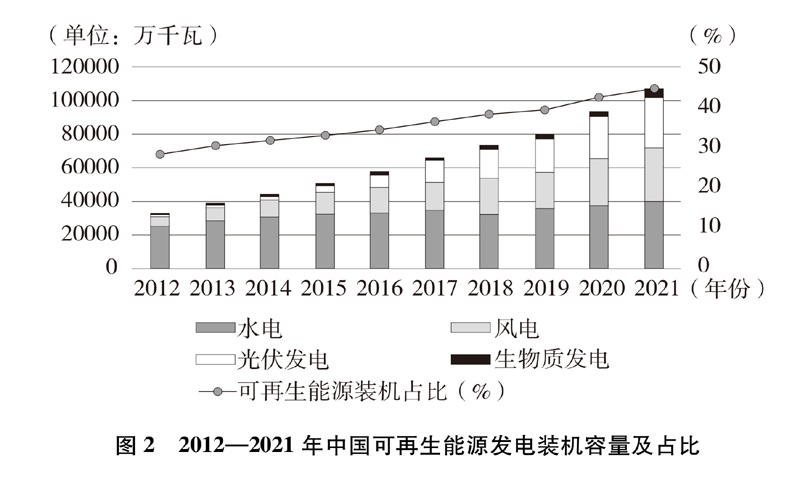
Vigorously develop non-fossil energy. Accelerate the construction of large-scale wind power photovoltaic bases focusing on deserts, Gobi and desert areas, actively and steadily develop offshore wind power, actively promote rooftop photovoltaics in towns and rural areas, and encourage the development of decentralized wind power in rural areas. Focusing on major rivers in southwest China, we will promote the construction of large hydropower bases in the basin in an orderly manner. Develop solar thermal utilization, biomass energy, geothermal energy and ocean energy according to local conditions, actively develop nuclear power in a safe and orderly manner, and vigorously develop urban domestic waste incineration to generate electricity. Adhere to innovation and actively develop hydrogen energy. Accelerate the construction of a new power system that adapts to the gradual increase in the proportion of new energy, carry out the assessment of the responsibility weight of renewable energy consumption, and promote the efficient consumption of renewable energy. By the end of 2021, the proportion of clean energy consumption increased from 14.5% in 2012 to 25.5%, and the proportion of coal consumption decreased from 68.5% in 2012 to 56.0%. The installed capacity of renewable energy exceeded 1 billion kilowatts, accounting for 44.8% of the total installed capacity, of which hydropower, wind power and photovoltaic power generation all exceeded 300 million kilowatts, ranking first in the world.
Improve the level of clean and efficient utilization of fossil energy. In order to promote the clean and low-carbon development of coal-fired power plants, the "three-reform linkage" of energy-saving and carbon-reducing transformation, flexibility transformation and heating transformation of coal-fired power plants has been carried out, and new coal-fired power units have implemented stricter energy-saving standards, and the power generation efficiency and pollutant emission control have reached the world leading level. We will promote the clean use of terminal energy, replace coal with natural gas, electricity and renewable energy, and actively promote clean heating in winter in the northern region. We will promote the efficient use of natural gas in urban gas, industrial fuel, gas-fired power generation, transportation and other fields in an orderly manner, and develop natural gas cogeneration. The implementation of the special campaign to upgrade the quality of refined oil has completed the road of upgrading the quality of refined oil in developed countries for more than 30 years in less than 10 years, and the quality of refined oil has reached the international advanced level, effectively reducing the emission of automobile exhaust pollutants.
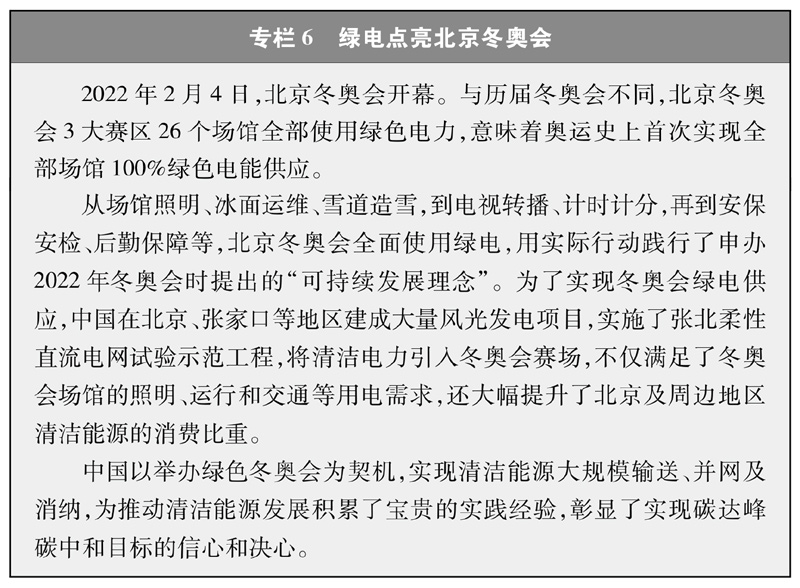
(C) building a green transportation system
The transportation industry consumes a lot of energy and emits a lot of pollutants and greenhouse gases, which is an area that needs to be paid attention to in order to realize green development. On the basis of improving the energy efficiency of transportation equipment, and with optimizing the energy consumption structure and improving organizational efficiency as the key, China has accelerated the construction of a green transportation system to make transportation more environmentally friendly and travel more low-carbon.
Optimize the transportation structure. Accelerate the construction of special railway lines, promote the "revolving iron" and "revolving water" of bulk goods, and carry out multimodal transport in depth. In 2021, the total freight volume of railways and waterways reached 24.56%, an increase of 3.85 percentage points over 2012. In-depth implementation of the priority development strategy of urban public transport, by the end of 2021, 51 cities had opened and operated 275 urban rail transit lines, with an operating mileage of more than 8,700 kilometers; Bus lanes increased from 5,256 kilometers in 2012 to 18,264 kilometers in 2021.
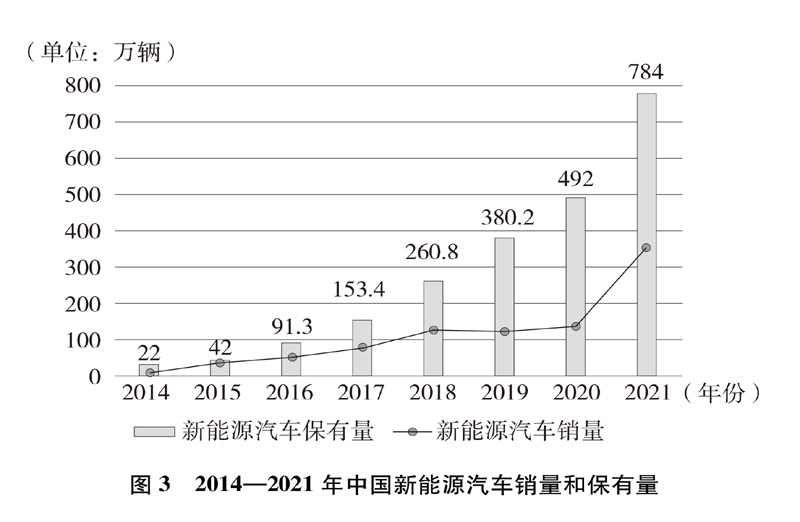
Promote the green transformation of transportation tools. Vigorously promote new energy vehicles in urban public transport, rental, sanitation, logistics and distribution, civil aviation, airports and party and government organs. By the end of 2021, the number of new energy vehicles in China reached 7.84 million, accounting for about half of the global total; The number of new energy buses reached 508,900, accounting for 71.7% of the total number of buses; The number of new energy taxis reached 207,800. Continuously promote the green transformation of railway mobile equipment, and the proportion of railway diesel locomotives will be reduced from 51% in 2012 to 36% in 2021. Improve motor vehicle pollutant emission standards, promote the transformation of LNG power and shore power receiving facilities for ships, and accelerate the transformation and elimination of old vehicles and boats. Since 2012, more than 30 million yellow-label vehicles and old vehicles have been eliminated, and 47,100 inland river vessels have been dismantled and rebuilt.
Improve the green level of transportation infrastructure. We will carry out special actions for green highway construction and vigorously promote the recycling of waste pavement materials. By the end of 2021, the recycling rate of waste pavement materials on expressways and ordinary national highways will reach 95% and 80% respectively. Continue to improve the level of highway greening, trunk highway greening mileage reached 570 thousand kilometers, an increase of about 200 thousand kilometers over 2012. Promote the electrification of railways, and the electrification rate will increase from 52.3% in 2012 to 73.3% in 2021. Further promote the construction of green transportation facilities for ports and highways. By the end of 2021, the coverage rate of shore power facilities for five types of specialized berths in major ports will reach 75%; 13,374 charging piles have been built in the expressway service area, ranking first in the world.
(D) Promote the conservation and intensive use of resources.
As a resource-demanding country, China has accelerated the fundamental transformation of its resource utilization mode, and strived to achieve the greatest economic and social benefits with the least cost of resources and environment, so that contemporary people can live a happy life, leave a foundation for future generations and make great contributions to the sustainable development of global resources and environment.
Improve energy efficiency. Improve the regulation of total energy consumption and intensity, and focus on controlling fossil energy consumption. Vigorously promote technical energy conservation, management energy conservation and structural energy conservation, and promote the continuous improvement of energy utilization efficiency. We will carry out the energy-saving and low-carbon actions of 10,000 enterprises, the action of 100 million key energy users and the action of energy efficiency "leaders", organize and implement the energy-saving and carbon-reducing transformation of high energy-consuming industries such as steel, electric power and chemical industry, strengthen the energy-saving management of energy users, and promote the energy efficiency of large and medium-sized enterprises in key industries to reach the world advanced level. Since 2012, China has supported an average annual economic growth of 6.6% with an average annual growth rate of 3% in energy consumption. In 2021, the energy consumption per 10,000 yuan of GDP decreased by 26.4% compared with 2012.
Improve the efficiency of water resources utilization. Strengthen the rigid constraint of water resources, and rationally determine the industrial and urban layout according to the water resources endowment. Carry out national water-saving actions and implement dual control of total water consumption and intensity. Implement water-saving technological transformation in high-water consumption industries and promote efficient water-saving irrigation in agriculture. The establishment of water-saving cities, the implementation of water efficiency labeling system and water-saving product certification, the popularization of water-saving appliances, the city’s per capita comprehensive water consumption continued to decline. China has also brought unconventional water sources such as reclaimed water, desalinated seawater, rainwater harvesting, brackish water and mine water into the unified allocation of water resources, effectively alleviating the contradiction between supply and demand of water resources in water-deficient areas. In 2021, the water consumption per 10,000 yuan of GDP decreased by 45% compared with 2012.
Strengthen economical and intensive use of land. We will improve the standard system of urban and rural land use, strictly control and approve all kinds of construction land standards, promote the conservation and intensive use of land for infrastructure projects such as transportation, energy and water conservancy, and strictly control new construction land. Strengthen rural land management and steadily promote the economical and intensive use of rural collective construction land. Establish a linkage mechanism between incremental arrangement of construction land and digested stock and a recovery mechanism of idle land to revitalize the stock land. From 2012 to 2021, the use area of construction land per unit GDP decreased by 40.85%.
Scientific utilization of marine resources. Strictly control reclamation. Except for major national projects, reclamation is completely prohibited, and problems left over from reclamation history are classified and disposed of. Establish a natural shoreline retention control system, implement classified protection and economical utilization of coastlines, strictly protect uninhabited islands, and minimize development and utilization.
Improve the level of comprehensive utilization of resources. We will build green mines, vigorously promote green exploration and green mining, improve the recovery rate, mineral processing recovery rate and comprehensive utilization rate of important mineral resources, and build a total of 1,101 national-level green mines. We will implement the "Hundred Flowers Project" for comprehensive utilization of resources, build a national "urban mineral" demonstration base, improve the recycling network of waste materials, promote the recycling of waste resources as a whole, and improve the processing and utilization level of renewable resources. In 2021, the recycling amount of nine kinds of renewable resources, such as waste steel, copper, aluminum, lead, zinc, waste paper, plastic, rubber and glass, will reach 385 million tons.
Five, the green lifestyle is becoming fashionable.
Green development is closely related to everyone, and everyone can be a practitioner and promoter of green development. China actively promotes the value concept of ecological civilization, promotes the people’s awareness of conservation, environmental protection and ecology, consciously practices a simple and moderate, green and low-carbon lifestyle, and forms a good atmosphere for the whole society to jointly promote green development.
(A) ecological civilization education continued to advance.
We will give a more prominent position to strengthening citizens’ awareness of ecological civilization, systematically promote publicity and education on ecological civilization, and advocate and promote the whole society to firmly establish the consumption concept and living habits of thrift. We will continue to carry out thematic publicity activities such as National Energy Conservation Publicity Week, China Water Week, National Urban Water Conservation Publicity Week, National Low Carbon Day, National Arbor Day, Sixth Five-Year Environment Day, International Biodiversity Day and Earth Day, actively guide and mobilize the whole society to participate in green development, and promote the concept of green living into families, communities, factories and rural areas. Incorporate the relevant contents of green development into the national education system, compile a reading book on ecological environmental protection, carry out basic national education on forests, grasslands, rivers and lakes, land, water, grain and other resources in primary and secondary schools, and advocate the green values of respecting and caring for nature. The Code of Conduct for Citizens’ Ecological Environment (Trial) was issued to guide the public to consciously practice the concept of green life, so that ecological and environmental protection thoughts can become the mainstream culture of society and form profound humanistic feelings.
(B) the creation of green life has been widely carried out.
We will extensively carry out the creation of conservation-oriented institutions, green families, green schools, green communities, green travel, green shopping malls, green buildings, etc., and popularize the concept of green life to all aspects such as food, clothing, housing, transportation and tourism. Up to now, 70% of the party and government organs at or above the county level have built conservation-oriented organs, nearly 100 colleges and universities have realized intelligent supervision of hydropower energy consumption, and 109 cities have participated in the creation of green travel with high quality. Domestic waste classification is widely carried out in cities above prefecture level, and residents’ habit of active classification is gradually formed, and the effect of garbage classification is initially apparent. Promulgating and implementing the Anti-Food Waste Law of People’s Republic of China (PRC), vigorously promoting food saving and anti-food waste work, and extensively and deeply carrying out the "CD-ROM" action, which has achieved remarkable results in food saving.
(C) the growing consumption of green products
Actively promote energy-saving and low-carbon products such as new energy vehicles and energy-efficient household appliances. Implement tax relief and financial subsidies, and continuously improve the charging infrastructure. The annual sales volume of new energy vehicles has rapidly increased from 13,000 in 2012 to 3.52 million in 2021, ranking first in the world for seven consecutive years since 2015. At the same time, we will continue to improve the promotion mechanism of green product certification, improve the government’s green procurement system, implement the energy efficiency and water efficiency labeling system, and guide and promote the consumption of green products. We will promote the construction of green circulation entities such as green shopping malls, encourage the vigorous development of new models such as sharing economy and second-hand transactions, enrich the categories of green consumer goods, and continuously expand the green consumer groups.
Six, the green development system and mechanism gradually improved.
To promote green development, institutional mechanism is the key. China has accelerated the construction and improvement of the system of ecological civilization system with clear orientation, scientific decision-making, strong implementation and effective incentives, continuously improved the efficiency of government governance for green development, and provided a solid guarantee for the smooth realization of green development tasks.
(1) Strengthening the rule of law.
Adhere to the concept of the rule of law and promote the construction of ecological civilization, write the "construction of ecological civilization" into the Constitution, formulate and amend the Yangtze River Protection Law, the Yellow River Protection Law, the Land Management Law, the Forest Law, the Grassland Law, the Wetland Protection Law, the Environmental Protection Law, the Environmental Protection Tax Law, the Air, Water and Soil Pollution Prevention Law and the Nuclear Safety Law, and basically establish an ecological civilization law and regulations system covering all key areas, all kinds of resources and all environmental elements. We will continue to improve the standard system of green development in key areas, and compile and revise more than 3,000 standards related to green development. We will implement the reform of the vertical management system for monitoring, supervision and law enforcement of ecological and environmental institutions below the provincial level, and severely investigate and deal with violations of laws and regulations in natural resources, ecological environment and other fields. Establish a system of information sharing, case notification and case transfer among comprehensive administrative law enforcement organs, public security organs, procuratorial organs and judicial organs for ecological environmental protection, strengthen the connection between ecological environmental administrative law enforcement and criminal justice, form a joint effort to investigate and deal with illegal and criminal acts that damage the ecological environment, and provide a strong guarantee of the rule of law for green development.
(2) Strengthen supervision and management.
Establish and improve the target evaluation and assessment system for promoting green development, and strictly implement the main responsibility of enterprises and the responsibility of government supervision. Abandon the development view and achievement view of "only talking about heroes in GDP", regard the relevant indicators of resources and environment as the binding indicators of national economic and social development, scientifically construct an economic and social development evaluation system that reflects the utilization of resources, energy consumption, environmental damage and ecological benefits, and give full play to the role of assessment "baton". Establish and implement the responsibility system for leading cadres’ ecological civilization construction, formulate and revise the measures for investigating the responsibility of leading cadres of the party and government for ecological environment damage (for Trial Implementation), the provisions on the supervision of central ecological environment protection, and the provisions on the audit of leading cadres’ natural resources assets (for Trial Implementation), and strictly implement the principle of "Party and government share the same responsibility, one post and two responsibilities", due diligence and exemption, and accountability for dereliction of duty in the field of ecological environment protection. Carry out the audit of the natural resources assets of leading cadres, and investigate the responsibility of leading cadres for ecological environment damage for life. The establishment of the central eco-environmental protection supervision system has tightened the responsibility of eco-environmental protection, which has promoted the solution of outstanding environmental problems that the people have strongly reflected.
(C) improve the market-oriented mechanism
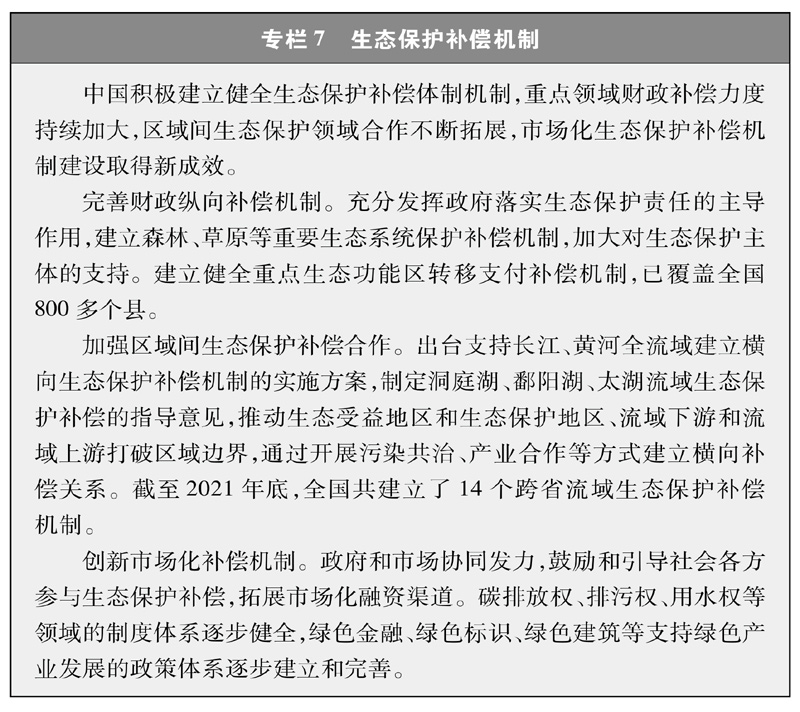
China has gradually established and improved the system and mechanism of strong government leadership, active participation of enterprises and effective market regulation, so as to better stimulate the enthusiasm of the whole society to participate in green development. Innovate and improve the price formation mechanism in key areas such as water saving and energy saving, sewage and garbage disposal, and air pollution control, implement more than 50 preferential tax and fee policies, guide the optimization of resource allocation, support the promotion of resource conservation and efficient utilization, and promote the development of green industries. Establish a unified registration system for natural resources, and establish ecological protection compensation mechanisms in forests, grasslands, wetlands, deserts, water flows, cultivated land and other fields. Explore the establishment of a value realization mechanism for ecological products, and encourage and support social capital to participate in ecological protection and restoration. On the premise of scientific and reasonable control of the total amount, we will establish an initial allocation and trading system for water rights, energy rights, emission rights and carbon emission rights, carry out the construction of a national carbon emission trading market and the pilot construction of green electricity trading, and further play the basic role of the market in the allocation of ecological environment resources. Vigorously develop green finance and form multi-level green financial products and market systems such as green credit, green bonds, green insurance, green funds and green trusts. By the end of 2021, the balance of local and foreign currency green credit in China was 15.9 trillion yuan, and the stock balance of green bonds exceeded 1.1 trillion yuan, ranking first in the world.
Seven, work together to build a beautiful earth home.
Promoting green development and building ecological civilization is the common cause of all mankind. China has always been an important participant, contributor and leader in the construction of global ecological civilization, firmly safeguarding multilateralism, actively participating in building a global ecological governance pattern with symbiotic interests, shared rights and shared responsibilities, and making contributions to the sustainable development of mankind.
(1) Actively participate in global climate governance.
China adheres to the principles of fairness, common but differentiated responsibilities and respective capabilities, firmly implements the United Nations Framework Convention on Climate Change, participates in the agenda of global climate negotiations with a positive and constructive attitude, makes historic contributions to the conclusion and implementation of the Paris Agreement, and promotes the construction of a fair, reasonable, win-win global climate governance system. Enhancing the national independent contribution will complete the reduction of the highest carbon emission intensity in the world, and realize peak carbon dioxide emissions’s carbon neutrality in the shortest time in the global history, fully reflecting the responsibility of a responsible big country. Actively carry out South-South cooperation on climate change. Since 2016, 10 low-carbon demonstration zones, 100 climate change mitigation and adaptation projects and 1,000 cooperation projects on climate change training places have been launched in developing countries, and more than 200 foreign aid projects on climate change have been implemented.
Cooperation in tackling climate change will encounter various twists and turns and difficulties, but China has always been an activist and doer of global climate governance. China will unswervingly push forward the goal of carbon neutrality in peak carbon dioxide emissions, as always, actively participate in international cooperation on climate change, constructively participate in international negotiations on climate change, provide support and help to developing countries within its capacity, and continue to make China contributions to the major challenges of global climate change.
(2) Promote the joint construction of the green "Belt and Road"
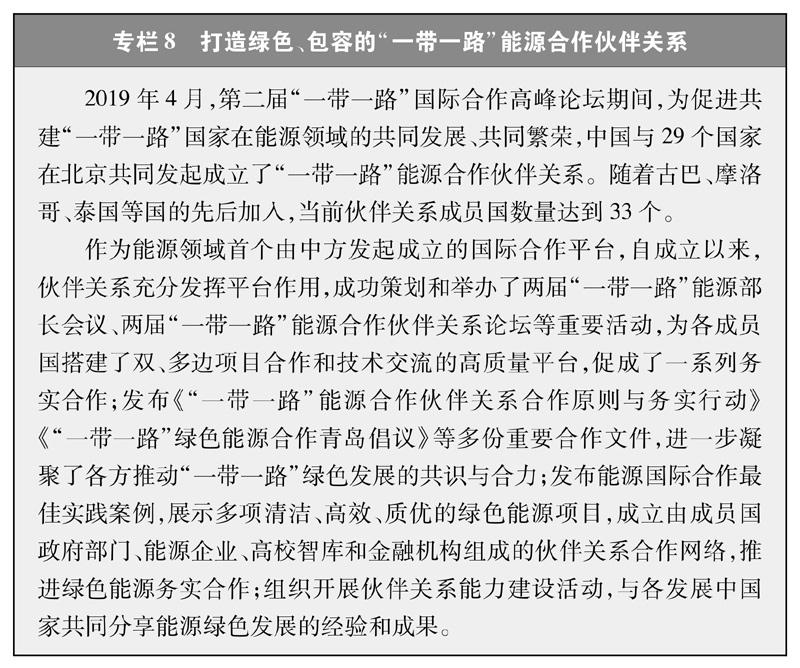
China has always been committed to promoting the green development of the "Belt and Road" and making green the background color of the "Belt and Road". Actively promote the establishment of a green and low-carbon development cooperation mechanism to jointly build the "Belt and Road", sign the Memorandum of Understanding on Building a Green Belt and Road with the United Nations Environment Programme, and sign more than 50 cooperation documents on ecological environmental protection with relevant countries and international organizations. Co-launch the "One Belt, One Road" green development partnership initiative with 31 co-construction countries and jointly establish the "One Belt, One Road" energy partnership with 32 co-construction countries. Initiate the establishment of the "One Belt, One Road" international alliance for green development, establish the "One Belt, One Road" international research institute for green development, and build a "One Belt, One Road" eco-friendly big data service platform to help build a country to improve its environmental governance capacity and enhance people’s livelihood and welfare. Actively help build countries to strengthen the cultivation of green talents, and implement the "Green Silk Road Messenger Program", which has trained 3,000 people for more than 120 build countries. Formulate and implement the "Belt and Road Green Investment Principles" to promote the "Belt and Road" green investment. Enterprises in China have jointly invested in a number of renewable energy projects, helped jointly build a number of key clean energy projects, and provided strong support for the green development of the host country.
(C) extensive bilateral and multilateral international cooperation.
China actively promotes pragmatic cooperation in the fields of resource conservation and ecological environment protection. Successfully held the first phase of the 15th Conference of the Parties to the Convention on Biological Diversity and the 14th Conference of the Parties to the Convention on Wetlands. Actively participate in cooperation in energy transformation and energy efficiency improvement under the framework of G20, China-ASEAN, ASEAN-China, Japan and Korea, East Asia Summit, China-Africa Cooperation Forum, BRICS, Shanghai Cooperation Organization and APEC, and take the lead in formulating the G20 Energy Efficiency Leading Plan, which has become an important achievement of G20 leaders’ Hangzhou Summit. Implement global development initiatives and promote the establishment of a global clean energy partnership. At the same time, it has cooperated with India, Brazil, South Africa, the United States, Japan, Germany, France, ASEAN and other countries and regions in energy conservation and environmental protection, clean energy, climate change, biodiversity protection, desertification control, marine and forest resources protection, etc. Promote relevant UN agencies, Asian Development Bank, Asian Infrastructure Investment Bank, New Development Bank, Global Environment Facility, Green Climate Fund, International Energy Agency, International Renewable Energy Agency and other international organizations to carry out green and low-carbon technical assistance, capacity building and pilot projects in key areas such as industry, agriculture, energy, transportation and urban and rural construction, which has made important contributions to promoting global sustainable development.
Concluding remarks
China has embarked on a new journey of building a socialist modern country in an all-round way and promoting the great rejuvenation of the Chinese nation in an all-round way. The harmonious coexistence of man and nature is an important feature of Chinese modernization.
The 20th National Congress of the Communist Party of China drew a blueprint for China’s future development, depicting a beautiful picture of China with green hills, flowing green water and fresh air. China will unswervingly follow the road of green development, promote the construction of ecological civilization, promote the development of higher quality, more efficiency, more fairness, more sustainability and safer, make green the most distinctive, heaviest and most reliable background color of beautiful China, and let the people share the beauty of nature, life and life among the green mountains and rivers.
The earth is the only home for all mankind to live on, and man and nature are the community of life. Protecting the ecological environment and promoting sustainable development are the common responsibilities of all countries. China is willing to work with the international community to build the foundation of ecological civilization, take the road of green development, protect the green earth home and build a cleaner and more beautiful world.